
Kid-Friendly Chores: Learning through everyday tasks
Charley
12/15/20252 min read
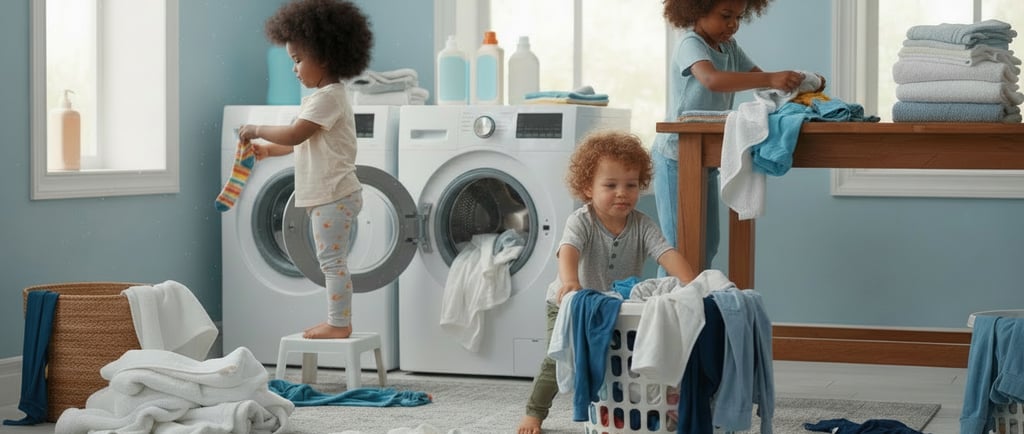
Let’s be honest — chores aren’t usually the highlight of anyone’s day. But what if they could double as fun, hands-on learning moments for your little one? Everyday tasks like sorting laundry or setting the table can actually build confidence, independence, and real-world skills — all while lightening your load a little.
At Little Sprouts, we believe learning doesn’t just happen in a classroom. It happens in the kitchen, the living room, and even during laundry day. Here’s how to turn your household chores into powerful learning opportunities.
🌱 Why Chores Matter for Kids
Chores teach more than responsibility — they help children feel capable. Giving your child small jobs helps them understand routines, follow steps, and see that their contributions make a difference.
On top of that, chores can boost:
Fine motor skills (like folding, pouring, and sorting)
Problem-solving and sequencing (first we sort, then we fold)
Math and sorting skills (counting utensils or matching colors)
It’s not about perfection — it’s about participation. When children feel trusted to help, their sense of pride and independence grows right alongside their skills.
🧩 Turning Chores into Learning Moments
With a few small tweaks, almost any household task can become a mini learning activity.
Name it: Use language intentionally. “Can you find all the red socks?” or “Let’s count how many forks we need.”
Slow it down: Give them time to explore and figure things out — that’s where the learning happens.
Celebrate effort: Whether they match one sock or five, praise the process.
🧒 Chore Ideas by Age
Toddlers (1–3 years)
Keep it simple and sensory!
Color-sorting laundry: Match socks or towels by color.
Toy cleanup: Use color-coded bins to match toys to their “home.
Wipe surfaces: A small cloth and spray bottle (with water) make them feel grown-up.
🧠 Learning angle: Sorting builds color recognition, categorization, and early logic. Wiping builds coordination and focus.
Preschoolers (3–5 years)
They’re ready for tasks that involve more steps.
Set the table: Count out utensils or napkins — one for each family member.
Sort utensils: Group spoons, forks, and knives.
Water plants: Teach measurement and care.
🧠 Learning angle: Strengthens sequencing, counting, and empathy through responsibility.
Early Elementary (5+ years)
Add more independence and reasoning.
Fold towels: Sort by size or stack by color.
Pack snacks or lunches: Practice portioning and planning.
Help with grocery lists: Identify items by category or first letter sound.
🧠 Learning angle: Builds spatial awareness, organization, and real-world problem-solving.
💡 Parent Tip
Turn chores into connection time. Play music, set a timer for “challenge mode,” or pretend you’re a cleaning crew. The goal isn’t perfection — it’s to make helping feel fun and rewarding.
Every small task is a step toward independence — and a reminder that learning can happen in the most ordinary (and slightly messy) moments.
📚 Research Spotlight
American Academy of Pediatrics (2023). Building Life Skills Through Family Routines and Chores. aap.org
Harvard University, Center on the Developing Child (2023). Executive Function and Self-Regulation: How Children Learn to Take Responsibility. developingchild.harvard.edu
Zero to Three Foundation (2022). Encouraging Independence in Early Childhood Through Everyday Routines. zerotothree.org
National Association for the Education of Young Children (2023). Helping Children Build Confidence and Competence Through Real-World Tasks. naeyc.org