
Why Learning Through Play Works for Every Child
Charley
1/1/20262 min read
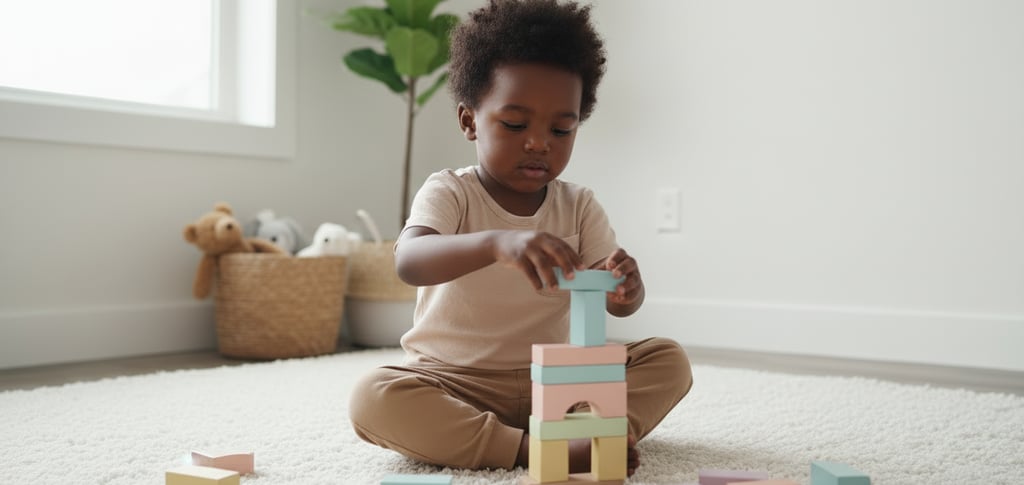
If you’ve ever watched your child build a fort out of couch cushions or turn a spoon into a drumstick, you’ve witnessed one of the most powerful forms of learning — play.
What looks like fun is actually serious brain work. When children play, they’re building problem-solving skills, learning to regulate emotions, and connecting new ideas — all without a worksheet in sight. At Little Sprouts Learning Hub, we believe that play is how children make sense of the world — it’s not just part of learning, it is learning.
🧠 The Science Behind Play
Experts across early childhood education agree: play isn’t a break from learning — it is the method of learning.
According to the LEGO Foundation, play is most effective when it’s joyful, meaningful, actively engaging, iterative, and socially interactive. Those moments of giggles and curiosity are when your child’s brain is most open to growth.
The National Association for the Education of Young Children (NAEYC) explains that playful learning supports initiative, creativity, and independence — helping children gain confidence and develop problem-solving skills long before they start formal schooling.
And research shared by the U.S. Department of Education’s Institute of Education Sciences found that play-based learning helps build core developmental domains — cognitive, language, emotional, and social — better than traditional, teacher-led instruction alone.
Translation? When your child is stacking blocks, pretending to shop for groceries, or making up a game with their friends, their brain is lighting up in all the right ways.
🧩 What’s Really Happening When Kids Play
When kids engage in play, here’s what’s going on under the surface:
Cognitive growth: figuring out cause and effect, memory, and focus
Language development: describing what they’re doing and negotiating with others
Math and logic: sorting, comparing, and estimating without realizing it
Social-emotional skills: learning empathy, turn-taking, and emotional regulation
Even open-ended play like pretend cooking or building with blocks gives them a sense of mastery, purpose, and control — all things that fuel deeper, more confident learning later on.
🌱 How Parents Can Nurture Learning Through Play
Here’s how to make the most of it — no degree required:
Follow their lead. Join in when invited, but let your child guide the story or activity.
Ask open-ended questions. “What do you think happens next?” or “How did you make that stand up?”
Add gentle challenges. Offer new materials, change the setting, or ask them to solve small problems within play.
Mix it into real life. Counting apples at the store or sorting laundry by color counts as play-based learning, too.
Remember: the goal isn’t to make play “productive.” It’s to give your child space to discover, imagine, and grow — all while you stay connected.
💬 A Word
I’ve seen the difference play makes firsthand. When children are allowed to explore, create, and even fail safely, their curiosity becomes unstoppable. That spark? That’s what we’re nurturing here at Little Sprouts Learning Hub — one playful moment at a time.
📚 Research Spotlight
LEGO Foundation (2024). The Scientific Case for Learning Through Play. learningthroughplay.com
National Association for the Education of Young Children (NAEYC) (2022). The Power of Playful Learning. naeyc.org
U.S. Department of Education, Institute of Education Sciences (2023). Play-Based Learning and Early Childhood Development. chhs.unh.edu